Today we’ve explored the ‘re-wilded’ land around the Beltie Burn.
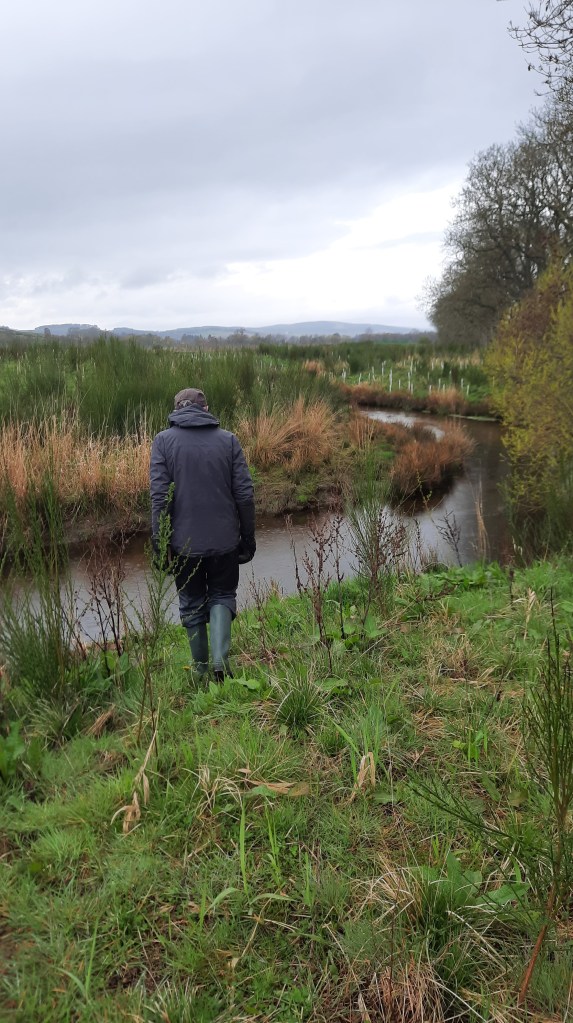
When there was still a railway connection between Aberdeen and Torphins, the Beltie Burn ran alongside it in a straight line. An unnatural situation and, habitat wise, quite a desert. That’s why the River Dee Trust launched a project to restore the burn’s natural bends, including fallen trees to hold sediment and provide spawning places. In doing so they’ve also created a huge wetland area. Apparently, the day after completion, salmon were already spotted!
Against the brown sand and slaty stones, the smolts (juvenile salmon) have an almost perfect camouflage. But we got lucky! Holding their position while facing upstream, their movement looked effortless. We wished them well on their long journey to the Atlantic, hoping they will return to the Beltie Burn once more once they have reached adulthood and are ready to start a new generation.
While walking in this mist and drizzle filled landscape, we suddenly heard a deep bellowing sound – we looked at each other and went ‘Bittern!’
It was unmistakable but we didn’t hear it again so couldn’t record it. Here is a Youtube clip:
It’s amazing to think that this rare bird (who is more often heard than seen) may have taken up residence in this newly established habitat.
Other elusive lifeforms this week included more morels, which we turned into a risotto. Our kitchen is now fully complete and we enjoyed cooking together.

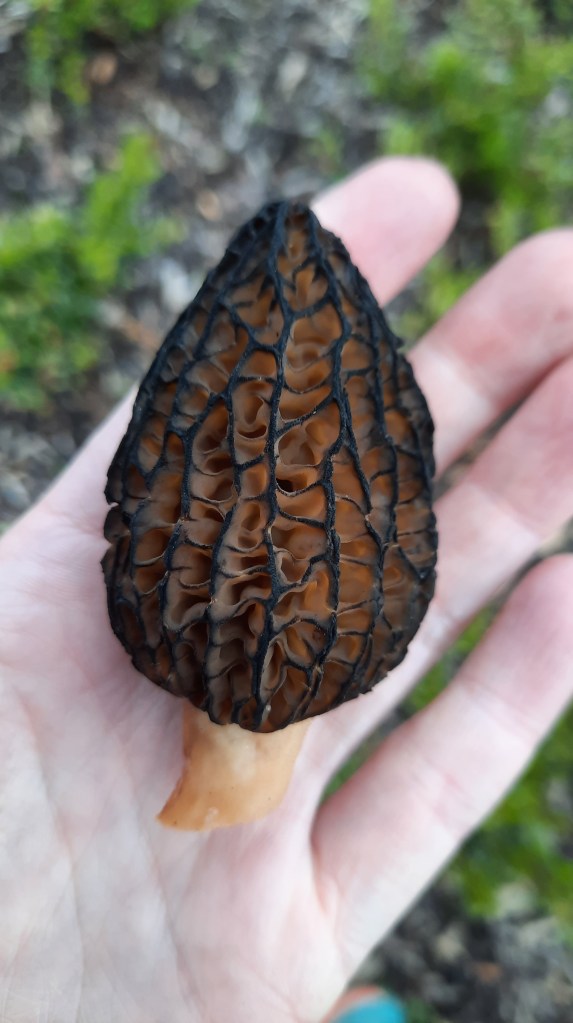

Still no St. George mushrooms, but last year we found them on John’s birthday, which is 3 weeks away… We will have to be patient, and some people struggle a bit with that 😆!
We wish you a good first week of May!
 The healthy forager
Dat is heel bijzonder om een roerdomp te horen. Jammer dat jullie hem niet gezien hebben.
In Nederland komt deze reigerachtige vogel bijna niet meer voor omdat er niet veel riet meer beschikbaar is voor de roerdomp.
Weer een mooie blog met prachtige informatie!
LikeLike