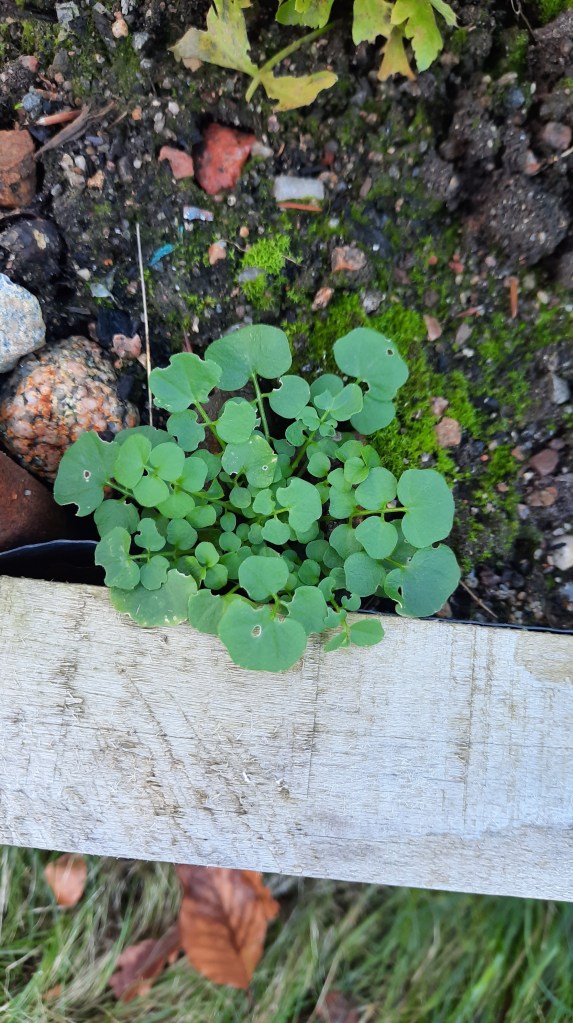
January is a good time of year to prepare the soil in the vegetable garden – as long as it’s not frozen solid of course! While taking out the last of the red cabbage, I was about to do some weeding, when I spotted these little chaps:
Bittercress
Bittercress! Often just pulled out and discarded onto the compost heap, this small plant is in fact delicious to eat and despite its size, it really packs a punch. It tastes peppery like rocket, with flashes of heat just like nasturtium flowers. Sprinkled over a salad, the tiny leaves could turn your meal from something good into something great!
Bittercress grows everywhere. If you have a vegetable patch, you probably have it growing there right now. Treasure, on your doorstep. Enjoy!
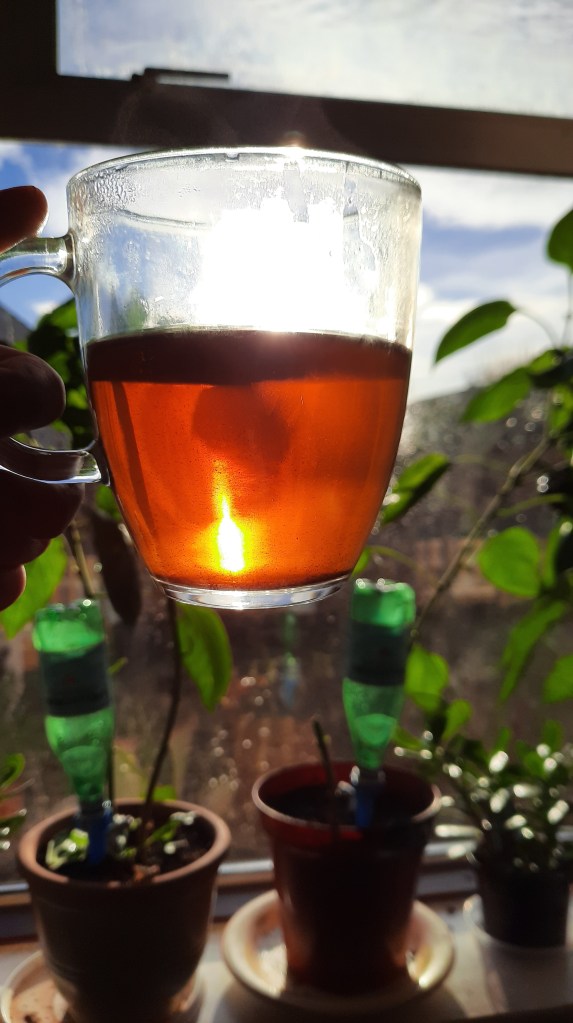
As promised, an update on how we’re getting on with the Chaga. After a few days I’m pleased to say that I’m noticing a marked improvement in my sleeping pattern. John and I are creatures of habit and we usually have an ‘evening snack’ in front of the fire, before hitting the hay. I’m now making a Chaga & Pine Needle infusion to go with the snack, and within 20 mins or so this has me absolutely zonked. Unlike camomile-based teas that mainly calm my head, Chaga calms my entire body, relaxing all the muscles. A nice deep sleep is the only possible outcome!
Chaga tea
I also drink it in the morning, but thankfully it doesn’t have the same effects then ;-). I can’t imagine falling asleep during a Teams meeting, but there has to be a first time for everything…
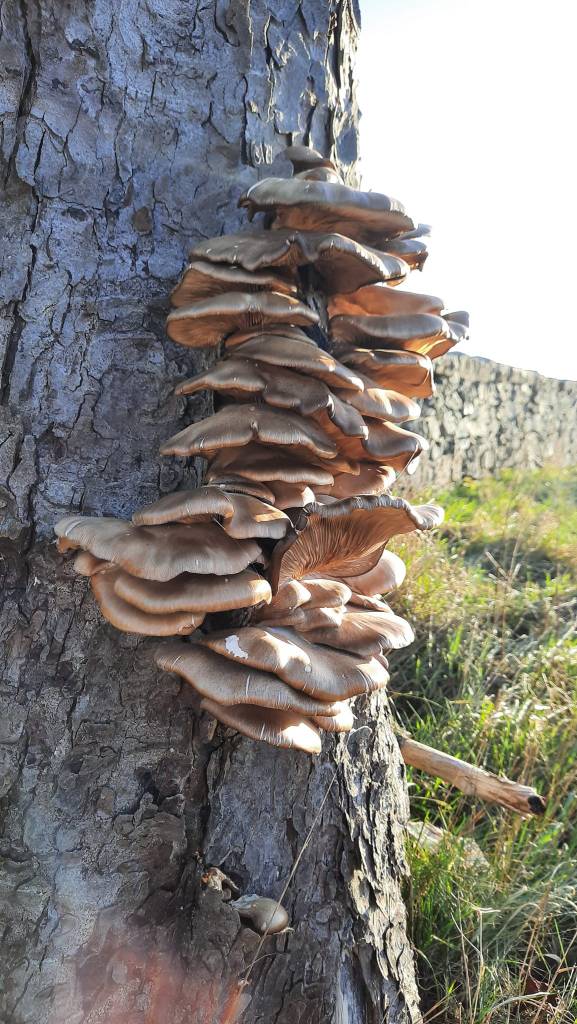
Meanwhile the Velvet Shanks are still going strong, and so are the Oysters. I found this wonderful “Oyster kebab” in the weekend and made a delicious soup with it:
Oysters on a chestnut tree
Wishing you all a very happy continuation of January! It’s an exciting month with lots to look forward to. Next time I’ll give you an update on how my onions are progressing – they’re just popping up above the soil. Watch this space!
Well… at least that’s what it looks like! Today I was lucky enough to stumble upon a piece of Chaga, growing on a birch tree about 200 metres from our house. They are parasitic fungi that will eventually kill their host tree. It’s a slow process that can take many years. The outside of the Chaga is very hard and charcoal like in appearance. Not the kind of thing you can pick off with your bare hands. So today I walked through the neighbourhood with a saw in my rucksack – feeling very badass ;-).
Chaga growing on birch
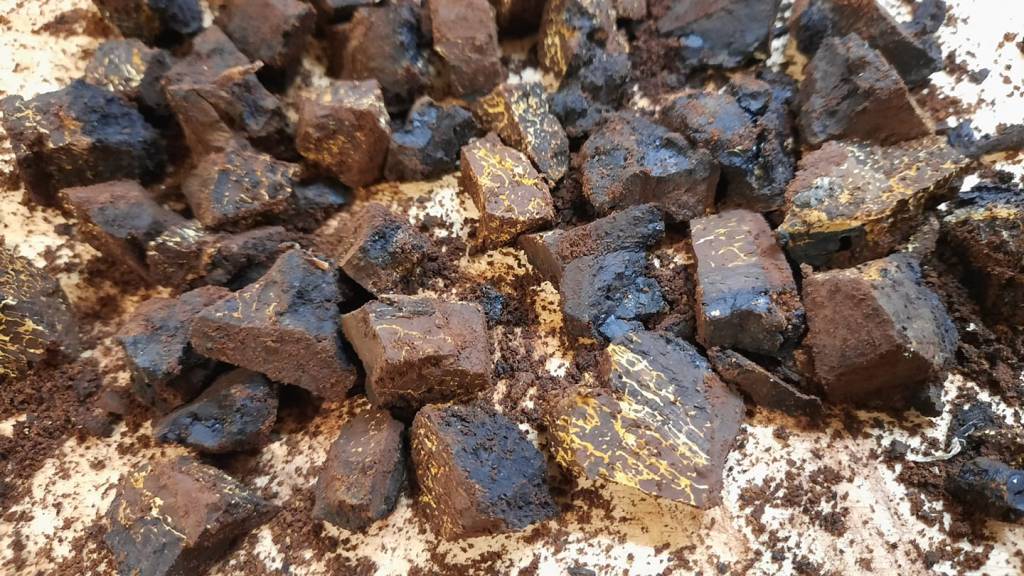
Once cut into smaller pieces, the wonderful golden colour reveals itself. To use it, it needs to be dried thoroughly and then ground or smashed into smaller pieces. These can then be added to coffee or tea (if fine enough) or put in a strainer if the pieces are larger. It has a flavour quite similar to coffee in terms of bitterness, but without the caffeine and a whole shedload of nutrients in its place!
Chaga pieces that look just like chocolate truffles with gold dust
Our pieces are currently sitting under the woodburner, quietly drying out in the warmth. I’m looking forward to having my daily Chaga brew, and I’ll keep you posted about any positive effects on my health along the way!
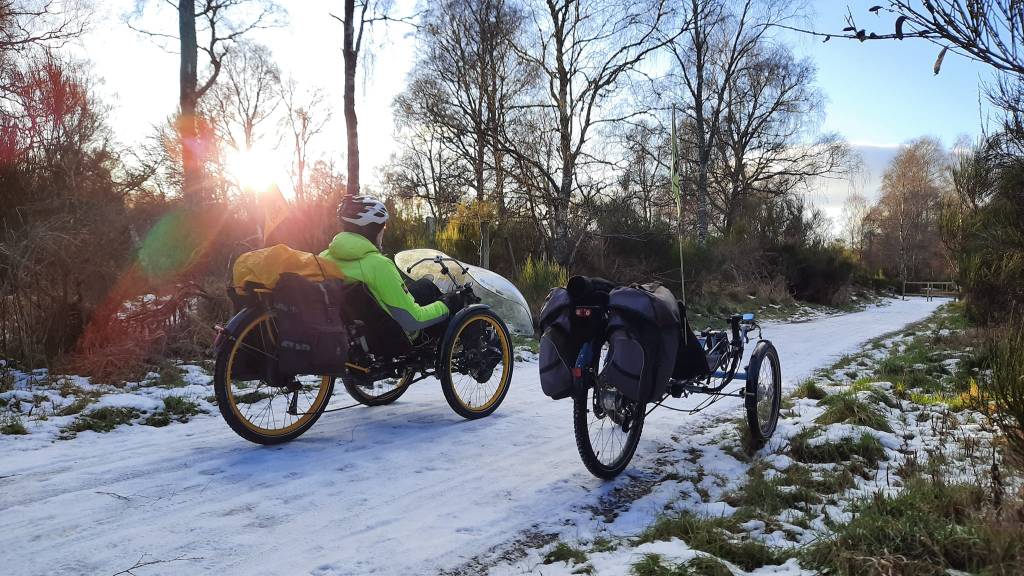
It seemed a great idea, back in August, to book a few days’ holiday in Ballater at the beginning of January. As the nights drew in and temperatures plummeted, we realised just what a challenge we’d set ourselves up for! Wearing pretty much everything we owned, we headed off into the crisp winter sunshine, on our beautiful trikes (designed and built from scratch by John).
Deeside Way near Dinnet
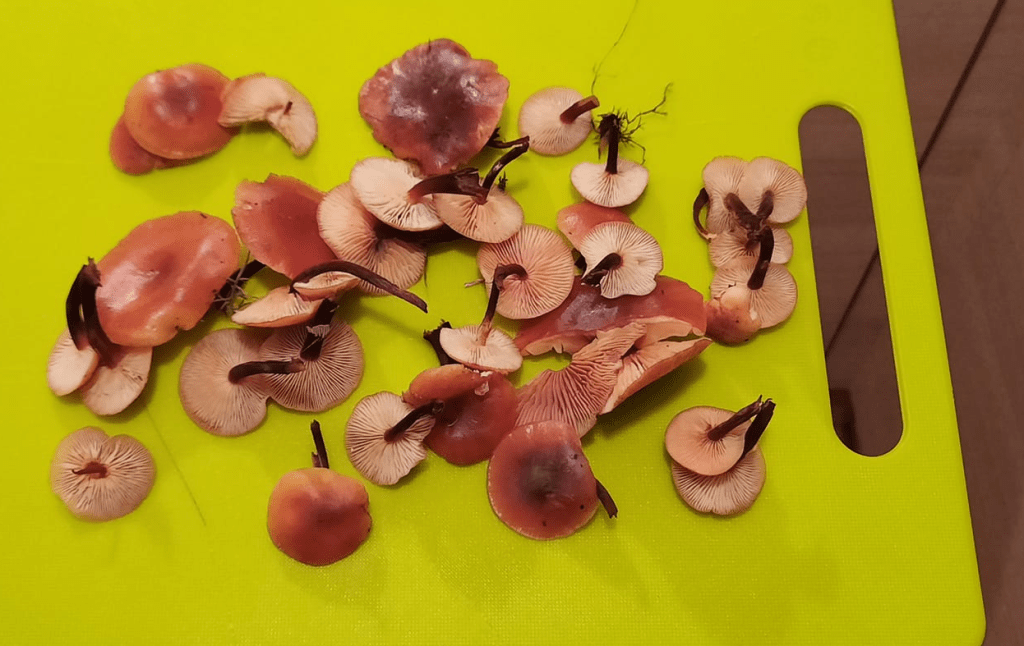
It was bitterly cold, but there is one species that thrives on these kinds of temperatures: Velvet Shanks! There is a lot of gorse along the Deeside Way, so I was hungrily looking out for them. We found a wonderful, pristine patch of them and cooked them in our Ballater kitchen:
Velvet Shanks
We’ve had a wonderful 4 days of triking in sub-zero temperatures. On Saturday we rode into Glen Muick, where many of the Million Tree Campaign trees will be and have been planted:
Loch Muick
When the ground is frozen solid, it’s hard to imagine it all coming back to life in the Spring. But underneath the surface, a lot goes on. I like to visualize the fungal mycelium with all the little baby mushrooms cuddled up in hibernation. That’s not how it works, but the picture in my mind is delightful!
As a forager and grower, I feel intimately connected with my surroundings. I may not have travelled the world, but I know every corner of my own Shire. Living with the seasons makes me look forward to the first rhubarb, the fresh shoots from the ground elder and the first sprigs of chickweed. I know when and where to look for raspberries, gooseberries, blueberries, cherries, plums and apples, and where I might go to find porcini, chanterelles and hedgehog mushrooms. In our shed is a large chest freezer where I store all the excess foraged food that we’re saving for later.
One day, when I was picking blackcurrants (one of my favourites) in Peterculter’s community garden, a granddad walked past me with his granddaughter. The girl was holding a small bag for her pickings. She saw me gobbling up a handful of fruit straight from the bush, and I said ‘go on, one for the bag, one for you!’. She pulled a face and her granddad sighed to me: “She won’t eat fruit unless it comes out of a plastic box from the supermarket”.
This little incident stayed with me. To me it epitomizes the general trend that I see all around me: as a species, humans have become far removed from the natural world in which they belong. They buy food out of season. They view wild fruits (let alone mushrooms!) with suspicion. They run on treadmills with music to distract them from the tedium, instead of out on the trails, where no distraction is needed, only immersion.
So this year, 2022, I want to do something about this. In my own small way. I want to raise awareness of our place in nature. A place that, once found, can restore not only our own mental and physical health, but also the health of the planet.
The Challenge
While I forage all year round, I also eat other things that do come from supermarkets. My plan is to cut this out and live almost entirely off foraged and homegrown food for one month (August 2022). There are 5 store-cupboard ingredients that I will keep using, as they enable me to make the most of my foraged ingredients: wholemeal flour, oil, sugar, salt and pepper. This will also enable me to keep making sourdough bread (which I have done since 2016), as a useful staple. Everything else I will have to find in the Shire or my own garden :-).
Fundraising
I am looking for people to sponsor me for this challenge. The suggested donation is the amount that you’d normally spend on food as a household in one day. The money will go to the River Dee Trust’s “One Million Trees” campaign (link to follow!). They are restoring the Dee’s natural habitat by planting native trees along the tributaries, that will in time give shade to cool the water – benefitting the salmon and all wildlife that in turn depends on them.
So, this challenge is a true win-win: raising awareness for our human place in the natural world, and raising money to restore a precious river habitat in one of the most beautiful places in the UK.
Thank you in advance for your support! Here is the link if you want to sponsor me:
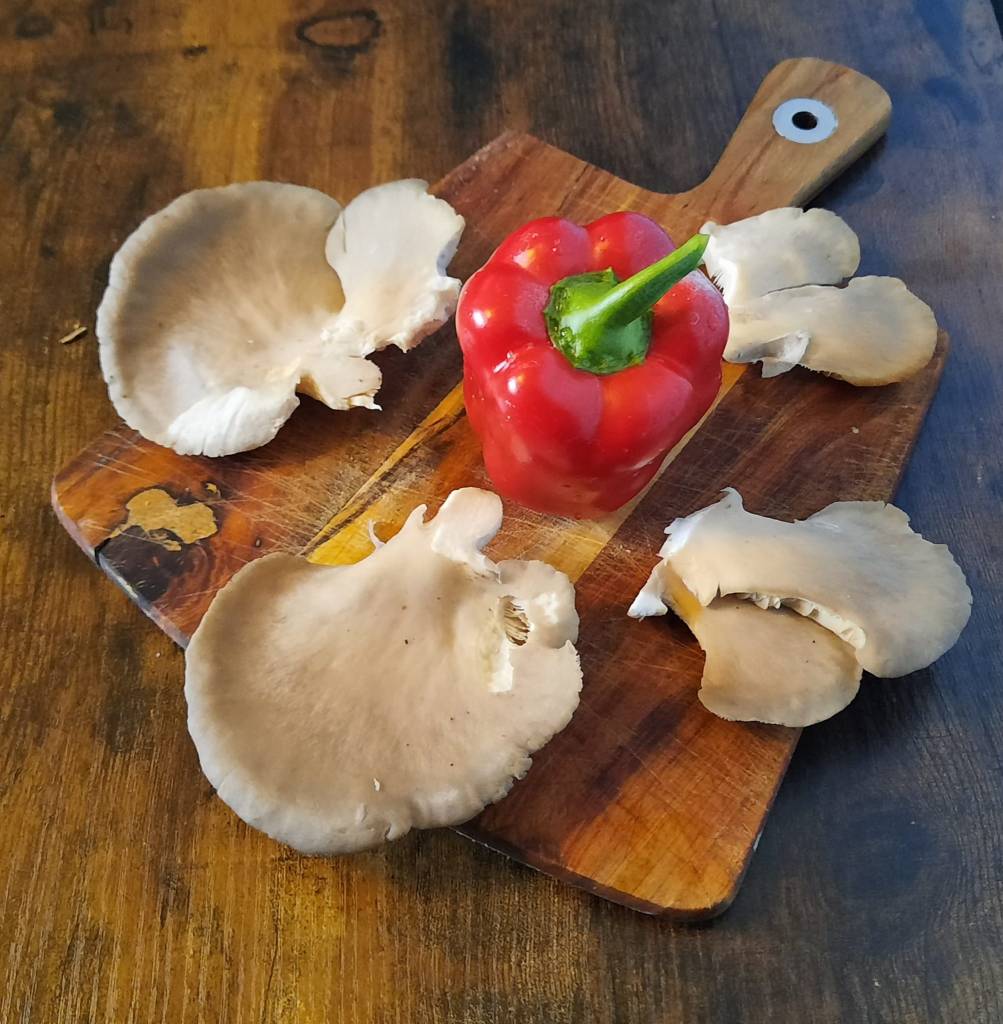
Finally, on the last day of the year I managed to make something that combines my love of foraging, growing and bread making; a very heavily loaded sourdough pizza featuring Grey Oyster mushrooms from our local wood, and homegrown peppers. I wish you all a wonderful, happy and healthy 2022!
Grey Oysters and a handsome red pepperFancy a slice?
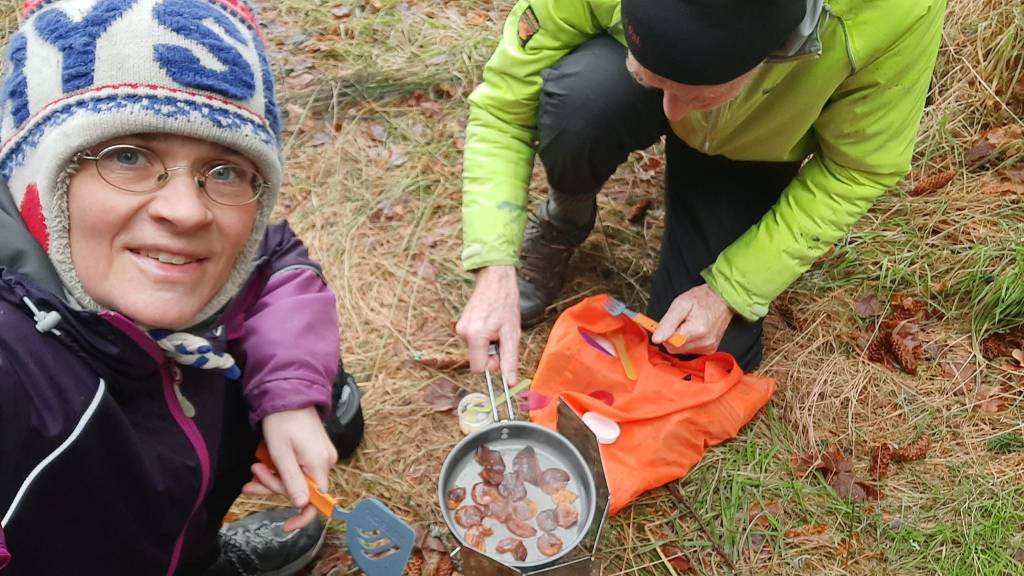
The ingredients for a perfect day: 2 bicycles, glorious Aberdeenshire countryside, unseasonally mild weather, and….. Velvet Shanks! I spent the outward journey with one eye fixed to the roadside, hoping to spot these brown beauties on the gorse that lines the verges. Finally after 20 miles we got lucky.
With rumbling stomachs we set up “camp” in a forest clearing, and fried the shanks on the stove. Oh boy, hot from the pan and infused with woodland aroma, they were the best!
December in the UK might sound an unlikely month to start a foraging blog, but there is still a surprising amount of free food around. In recent weeks we have been gorging on Velvet Shanks and Grey Oysters. Also Wood Ears (not everyone’s favourite but I love them) are out and we’ve been sipping our way through a fair bit of pine needles. Finally, the summer of 2021 still keeps on giving, as we’re turning a surplus of Blackberries into a delicious red wine.
Larger than life Oysters
Grey Oysters are fairly easy to identify; look for them on dead or dying deciduous trees, mainly beech. Oysters have gills that run down the stipe (stem) and the bottom end of the stipe is slightly woolly. They are very tough to cut, as I found out while balancing precariously on a wall, trying to reach for my supper!
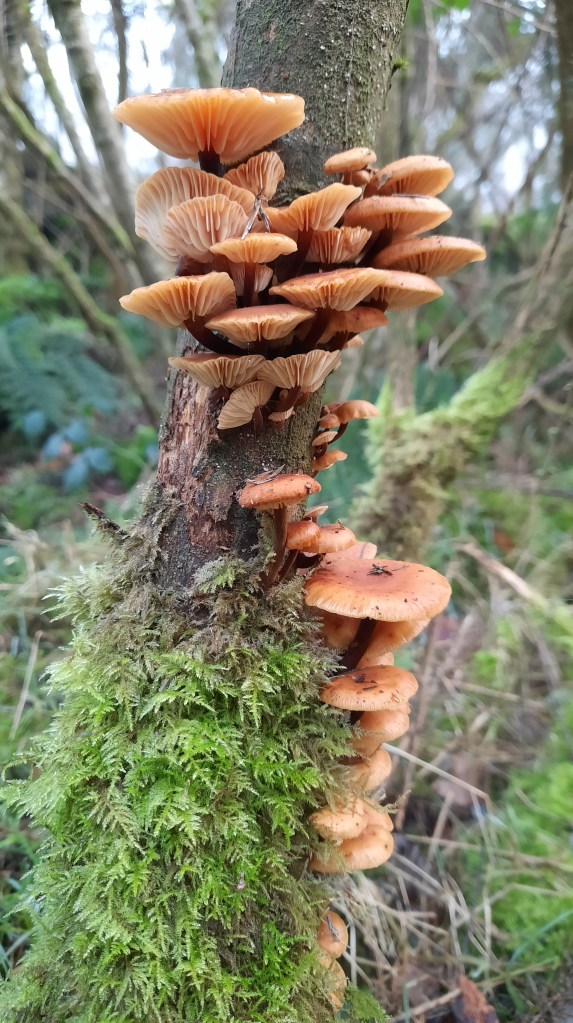
The Velvet Shanks (pictured below) are almost too beautiful to eat. When I come across them (on dead gorse) I always feel that I’m disturbing an intimate party. But they’re too good to leave, so into my foraging box they go. They only need a few minutes per side in the pan, and a wee sprinkling of salt and pepper. Do cut off the stem as you don’t want to be chewing wood bark.
Velvet Shanks
John has decided that he doesn’t like Wood Ears (below). I on the other hand, love them. I must admit they do look a bit alien, but give them a go before you make up your mind. You’ll find them on dead or dying elder trees.
Wood Ears
Finally, the drinks department! Storm Arwen brought down a lot of Scots Pine in our local woods, which was heartbreaking to see. However, I take comfort from the fact that their needles are still being used and enjoyed by us. A small handful of crushed needles infused in hot (not boiling) water makes an incredibly healthy brew – high in vitamin C and good for the digestion. The taste is mild and reminiscent of woodland walks. Less healthy but super enjoyable is our other brew: blackberry wine! Made with berries from this year’s abundance, it’ll be ready to drink in 5 months’ time. Patience is a virtue…
Tomorrow we’re heading out for a long bike ride, bringing a camping stove with us! I’m hopeful that we will find some Velvet Shanks to fry up as a roadside snack. Watch this space!





 The healthy forager