Old leaves and new leaves

It’s been a while since my last post – we’re having a new kitchen installed and that’s taking up quite a lot of our mental energy. I’m thrilled to bits that our new ‘food hub’ will have dedicated open shelves for my Kilner jars full of foraged leaves, and a rack for our homemade wine. Pictures to follow in a couple of weeks!

Even though it’s still pretty cold up here, things are happening on the leaf front. Today I saw the Hawthorn is coming out:
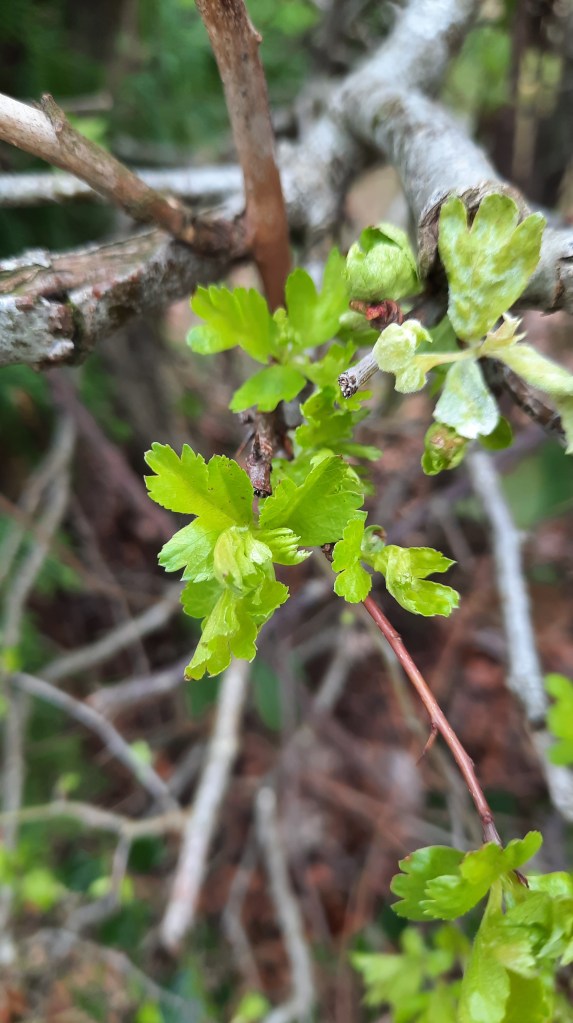
Hawthorn

The young leaves can be eaten raw, just like the flower buds when they appear. You can also dry the leaves and make tea (I love making tea with anything).

Meanwhile the beeches are still clinging on to their foliage from last year! A befriended arborealist told us that this is to prevent deer eating the young buds – the old leaves taste really astringent. Now, this property makes them also highly suitable for – you guessed it – tea! I picked some today and they’re crisping up on the stove as we speak.

Beech leaves

Great excitement as I walked on through the James Hutton grounds: wild garlic is finally here! I didn’t pick any as we don’t have a fully operational kitchen (the plan is to live on made-ahead microwave meals), but it was still lovely to see.
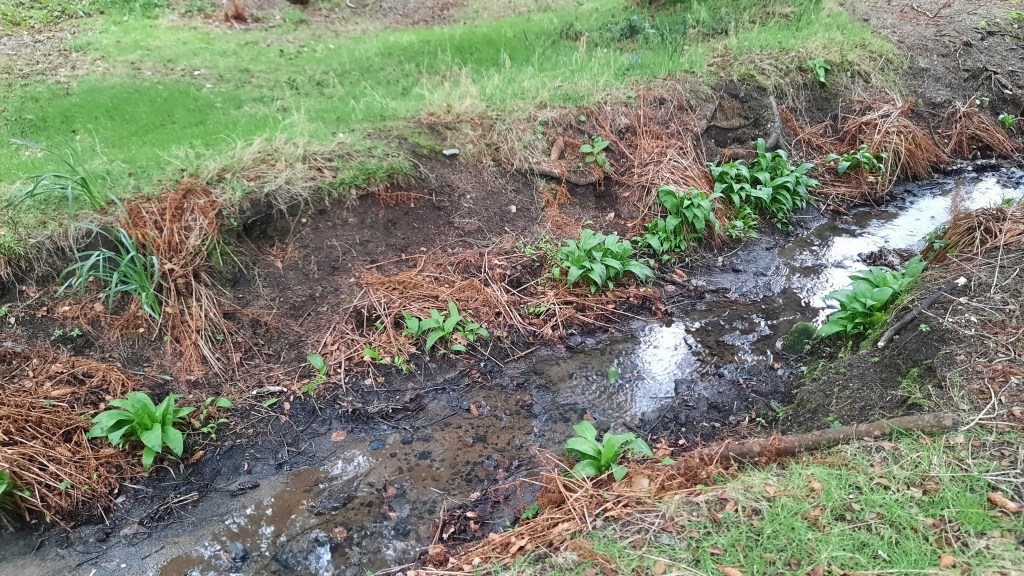
Wild garlic along a shallow burn

Then, under a tree near the end of the path, I found what I expected to find there: the first Spring Cavalier of the season! I found it there last year, and for some reason it was very moving to see it pop its wee brown head above the soil again.
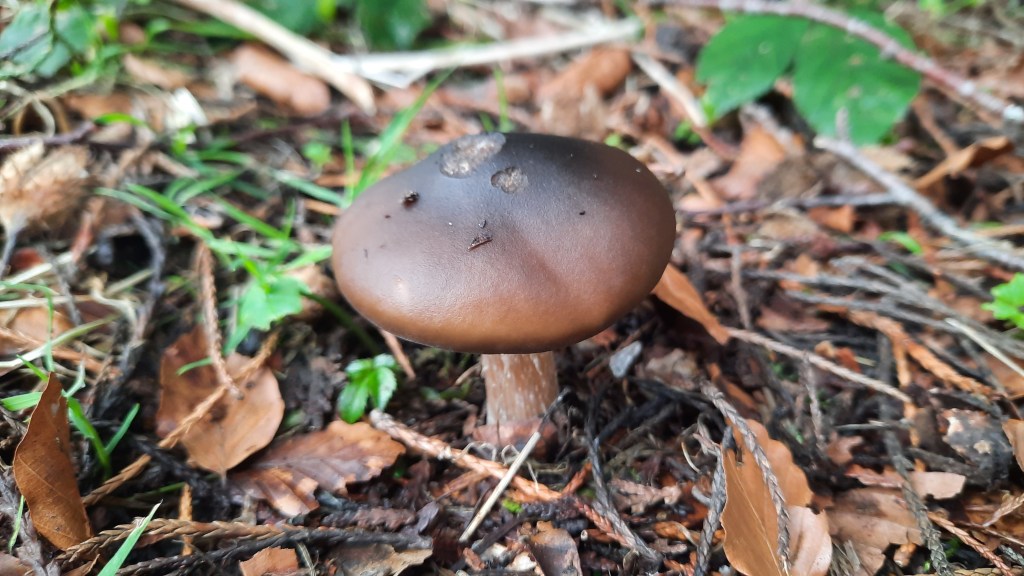
Spring Cavalier 2023 edition

They are delicious, but there was only one so I left it to spore and hopefully multiply. It won’t be long now until the St. George’s appear. I’m very excited about the season ahead and wish you all a happy Spring!
Love in a forest

I know the title is perhaps a little bit suggestive 🤭. But don’t worry, this is all entirely clean. Read on to find out about our wonderful woodland experience on Saturday.

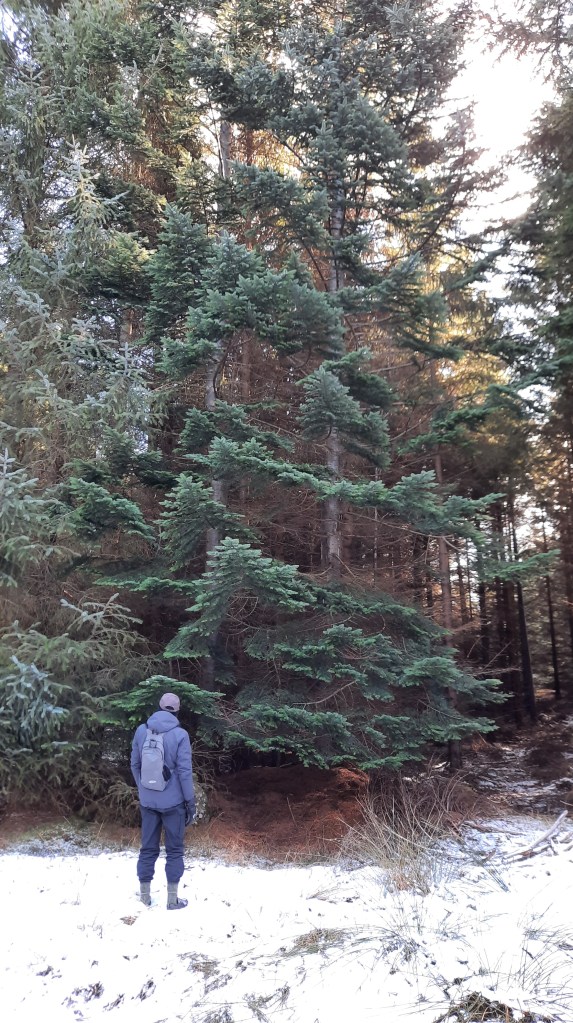
The weather was crisp and sunny, with blue skies and a fair bit of snow left. We cycled out to Inchmarlo on our roadbikes with the mission to identify a tree I had seen up along a forest track several years ago.

As we walked into the embrace of trees, the sounds of the road faded. Soon, the only things audible were our crunchy footsteps and our souls singing at the delight of being amongst friends. At the junction of paths we found our tree.

John and a Noble Fir

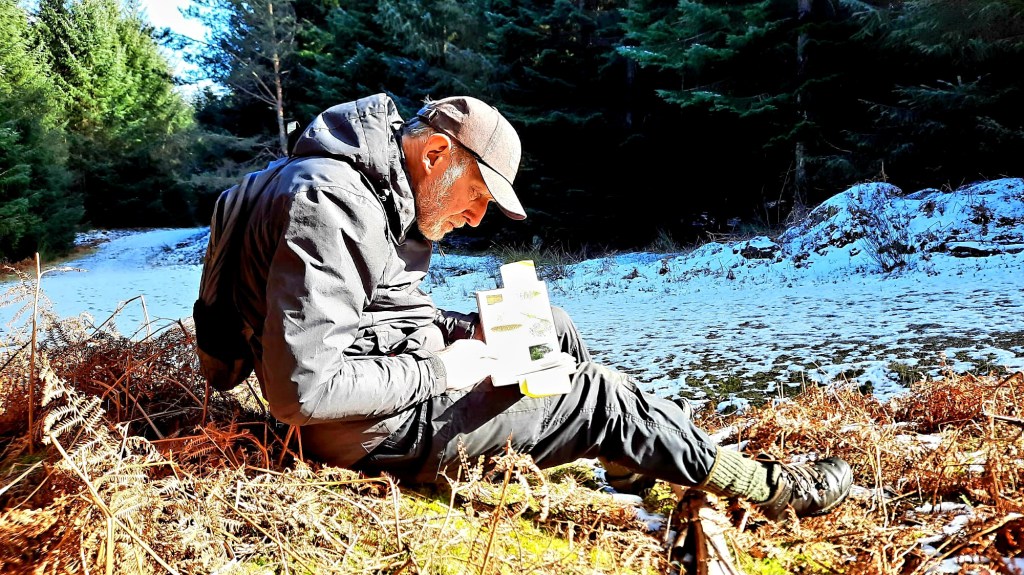
Time stood still. We touched branches, sniffed them, turned them over, crawled under the lower branches to inspect the bark, took photos. We squirrelled through the undergrowth looking for cones. We sat on the forest floor with our identification guide. We kissed. We were still and in awe of the wonder all around us.

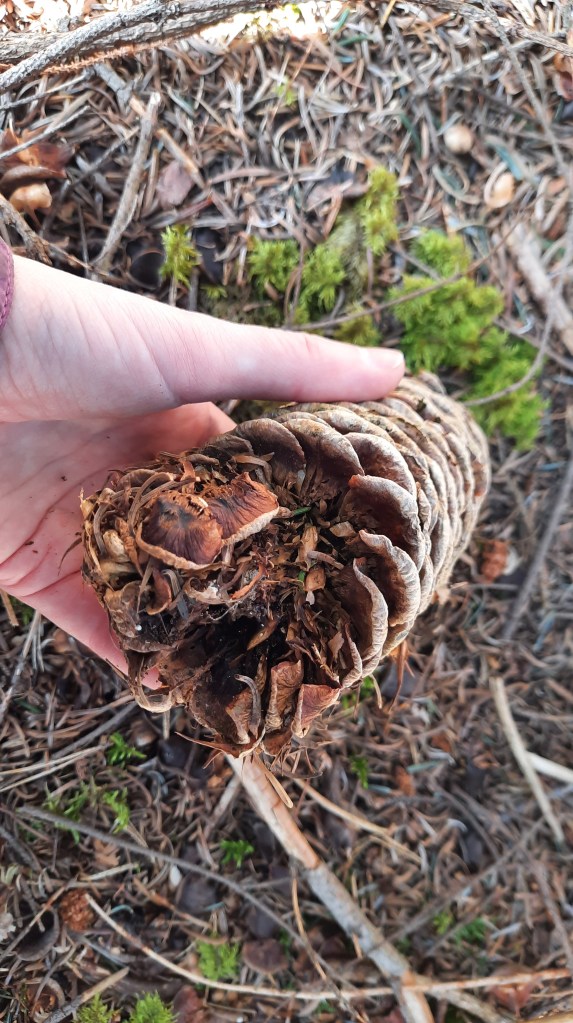
We identified the tree as a Noble Fir, with edible needles and seeds. I’ve taken some seeds home to see if they will sprout.

Noble Fir cone

Back at the bikes we heated up soup and I sat on the gravel watching John stir the pot. I will not forget the image. To be with my person, who shares my deep connection with the land, and to feel the sun on my face. As I’m writing this, I realise that this week’s blog is a love letter to John.

Pollen

Normally just hearing this word is enough to make me sneeze. Both John and I get runny eyes and noses when we cycle through clouds of pollen. We mostly get it from grass. But this weekend we’ve had a pollen-positive experience!

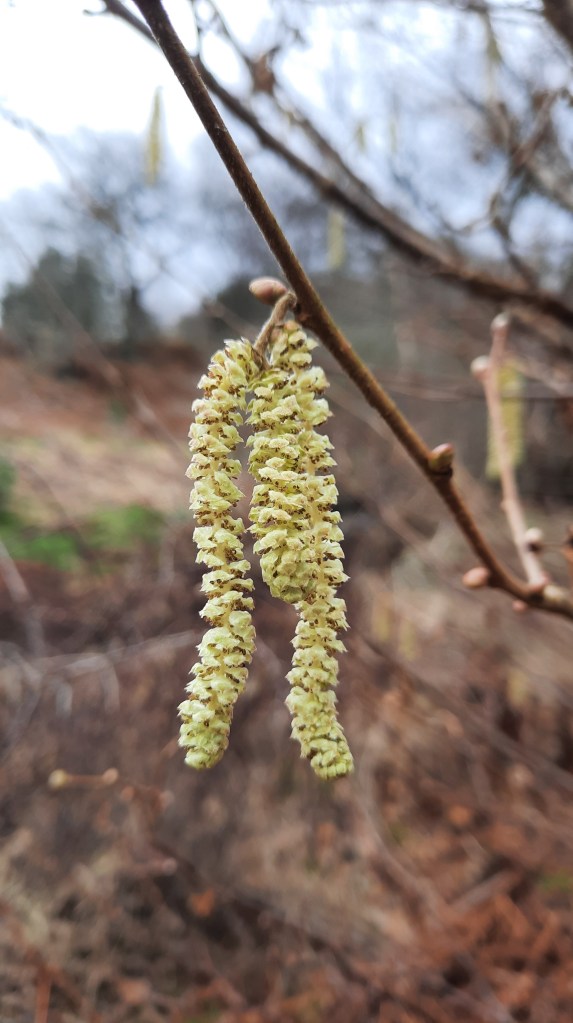
Many trees are producing catkins right now, for example the Hazel. Someone called them “the bananas of the north” 😆. You can see why though:

Hazel catkins

These catkins are the male flowers, producing pollen that travel to the female flowers on the wind. The good news for us foragers: they are edible! As they are essentially providing half the building blocks for a seed (and hence, a new tree), these little ‘bananas’ are quite nutritious. I dried them out on our stove and then crumbled them up. This morning it made a tasty (slightly nutty) cereal topper.

Cereal with hazel catkins

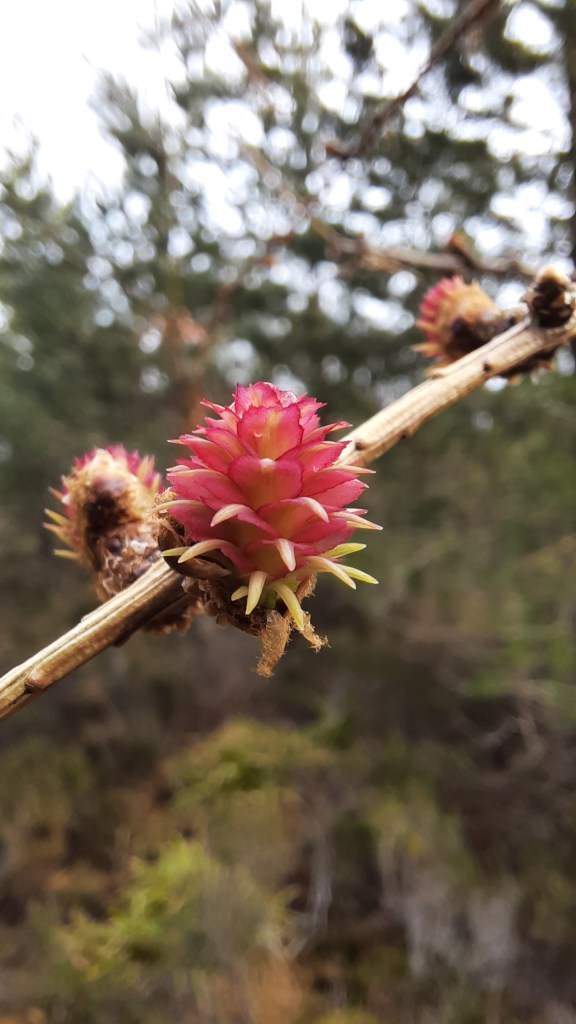
Other trees in bloom are the Larches. Their female flowers are delicate and spectacularly coloured, quite unexpectedly so. They’re also edible but I find them too beautiful to pick.

Female larch flower

John and I walked on Hill of Fare today. Immersed in a heather-granite-pine landscape, my soul got infused with the Cairngorm scent and I felt deeply happy.

We’re bracing ourselves for another round of snow, so the images below will have to get us through the week. Have a good one and stay warm!

Picnic on Hill of Fare
Through heather and pine on a crackly track

Scots pine

I’ve been a bit quiet in the past two weeks, as we have reached the so-called “hungry gap”; there’s not a huge amount of edible stuff growing, and I can see the bottom of the freezer again. Though it will be a while before we’ve totally run out of stored foraged food, a post about defrosting plums may be of less interest 😆.

Two things I’m still currently foraging are blackberry leaves and pine needles for tea.

Blackberry leaves

The leaves and needles, when dried, get mixed with chaga powder. This is my go-to drink in the morning. I’m also putting this concoction in tea bags to send to my dad. He’s had surgery and could do with a boost to his immune system.

Teabags full of goodness

While I was drying Scots pine needles (from a fallen tree) one of the branches contained a cone. I kept it as I think they’re beautiful. But then a few days ago I held the cone upside down and a whole stream of seeds came fluttering out! They’re a bit like sycamore seeds, with a ‘wing’ to help them travel far.

I absolutely love Scots pine. Their reddish bark and irregular shape, their scent and habitat with heather… Whenever I’m near one I feel at home, in the moment, and protected somehow.

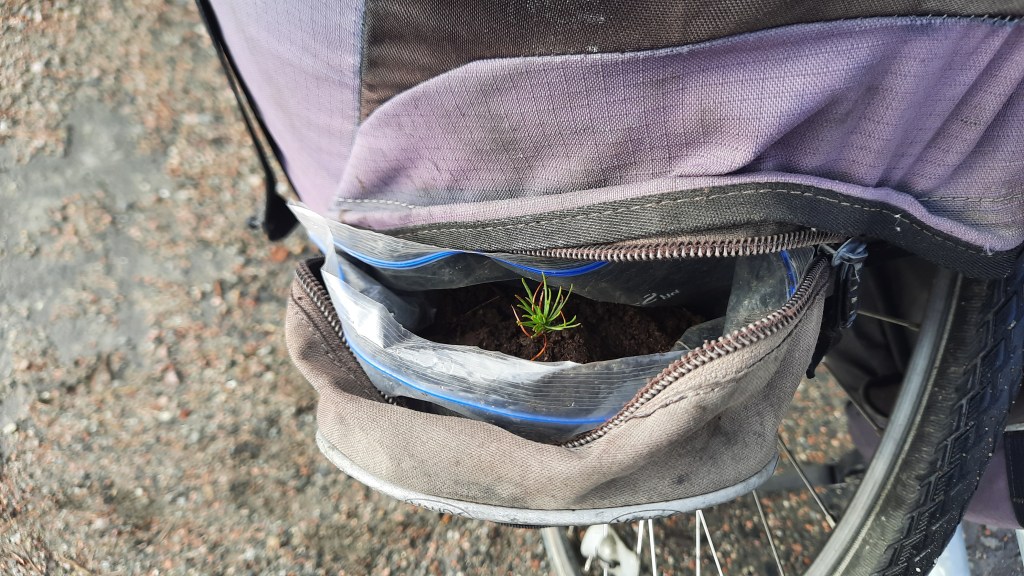
So I decided to sow these little seeds. Yesterday I went out to the woods near Knockburn with a small bag, to get some native soil for the wee chaps. It so happened that a tree feller had dug a deep trench and the soil was easily available to scoop up. But then I spotted it: a tiny Scots pine seedling, atop the tyre track.

I know you shouldn’t uproot wild plants, but this one would have a guaranteed death if it stayed where it was, so I took it home in my pannier:

Peek-a-boo!

Back home I mixed the heavy soil with some sand, and sowed the seeds. The seedling has its own pot and is enjoying a sunny aspect at the front of the house.

The ancient Caledonian forests started like this – tiny seedlings that turned into Scotland’s answer to ‘primeval’.

I will try to remember to photograph a mature one next time I’m out. There’s other food to come, too: today I saw the first butterburr flowers and ground elder. Frying pans at the ready!

A weekend out in the Shire

This could be the title of EVERY blog, to be honest! We’re always out, exploring the countrylanes that we love so much. But this Saturday I rode out to Craigievar, an area that somehow always feels further, wider and deeper inland than other places. I had a mission: to view a wee housie that was for sale… Well, it is officially “under offer” so all we can do is dream of ‘what could have been’, but dreaming is free and thoroughly enjoyable! The housie is called ‘Craigievar Cottage’ and is sitting amongst trees and agricultural land:

Craigievar Cottage

Round the back is enough land for the two of us to grow all of our own vegetables, plant an orchard, and keep a small flock of chickens happy. Self-sufficiency is something we aim for, but for the moment we’re bound to Aberdeen – so I’ve put my hopes on getting to the top of the allotment waiting list this year.

Cycling back home, over the Clash, the wind was in my back and the sun upon my face. The midday winter sky was crisp and blue. As I plummeted down the road into Tornaveen, my heart felt so full of joy that I feared it would overflow!

As intense as my joy, so was my sorrow when I found the curlew (see yesterday’s post). I still see her wide open eye before me. Sweet little soul, be at peace.

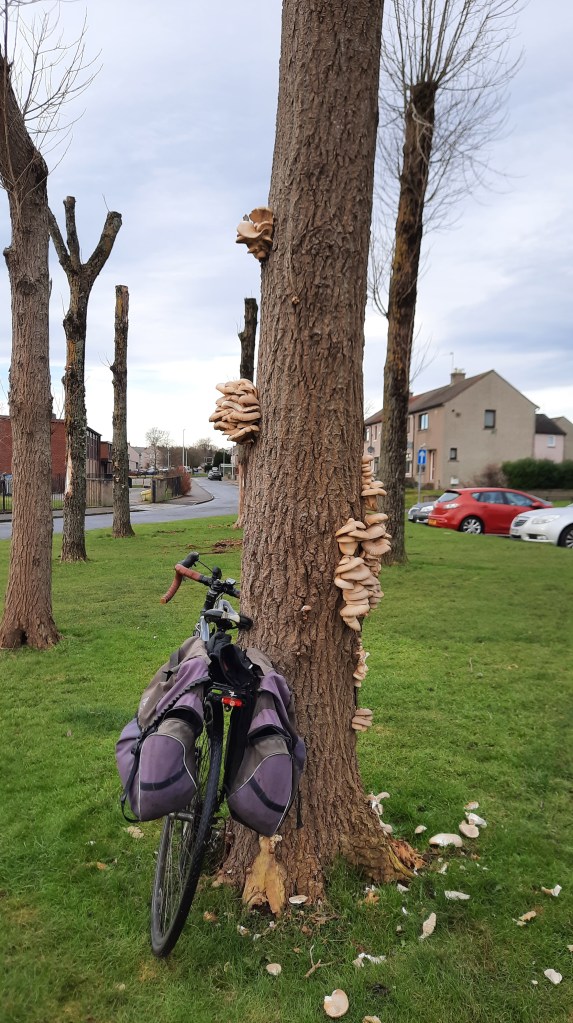
Today we braced the wind together for a shorter ride to Kintore. We hadn’t even left the city boundary when we found oyster mushrooms:

Oysters

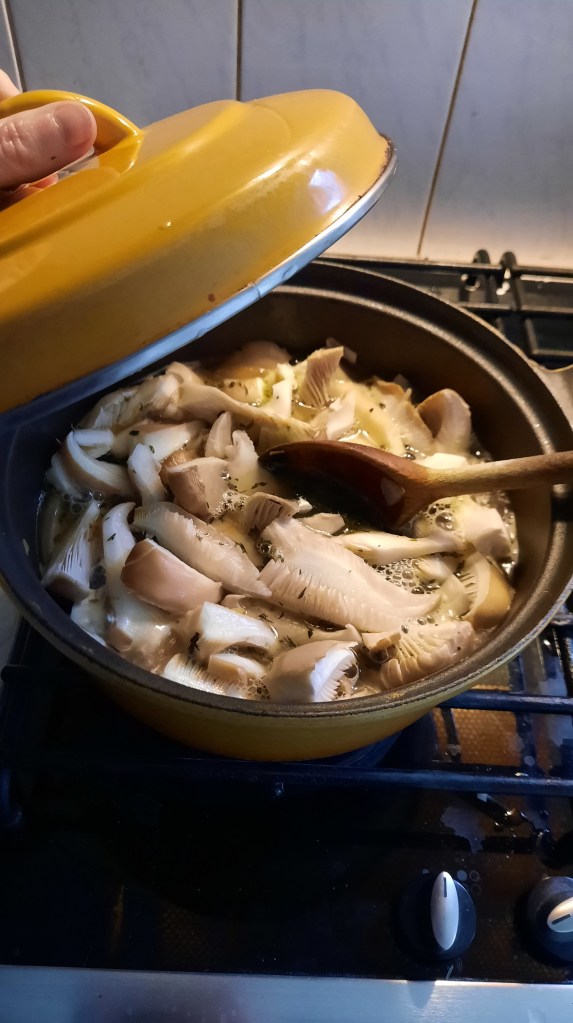
They were on pollarded willow trees, with more to come if we get some rain. We took what we needed for a nice pan of soup:

Oyster soup

We had a picnic at the standing stones above Blackburn. The field in front of us had barley in it, like it did during the Spring of 2020. I’ll always associate that spot with the first Lockdown, when we cycled on empty roads and it didn’t rain for many weeks. I was worried about the barley, then. Thinking that it wouldn’t survive the drought. But it did, it grew wonderfully big and strong. And so did we. At times I thought the Lockdown would never end, but we got through it.

So ends January – I hope it’s been a good month for you. The days are getting longer now, and pretty soon there will be more edible things to forage. I’m looking forward to it!

Curlew

If there is one downside to cycling, it’s seeing all the dead animals at the side of the road. Birds, deer, badgers, rabbits, squirrels, foxes… especially the birds get me. Most of my rides are punctuated with grief for a soul that died before its time. I cope by writing them a poem. Here’s one for a curlew I saw today.


‐————-
To a curlew

Her small leafbrown body
is cast aside between road and grass

The bright blue sky
is reflected in her dark open eye
that no longer sees

But last year’s summer still hears her
haunting call
The now-sleeping fields
still dream her fleeting shadow
The wind still feels
her bow-curved wings

She has lived

And she is fully known

—————

A high mileage weekend

Ninety, to be precise. All around the very best country lanes that Aberdeenshire has to offer. A fair deal of climbing was involved, and I got so warm that I even took my jacket off (in January!).

The road near Potarch
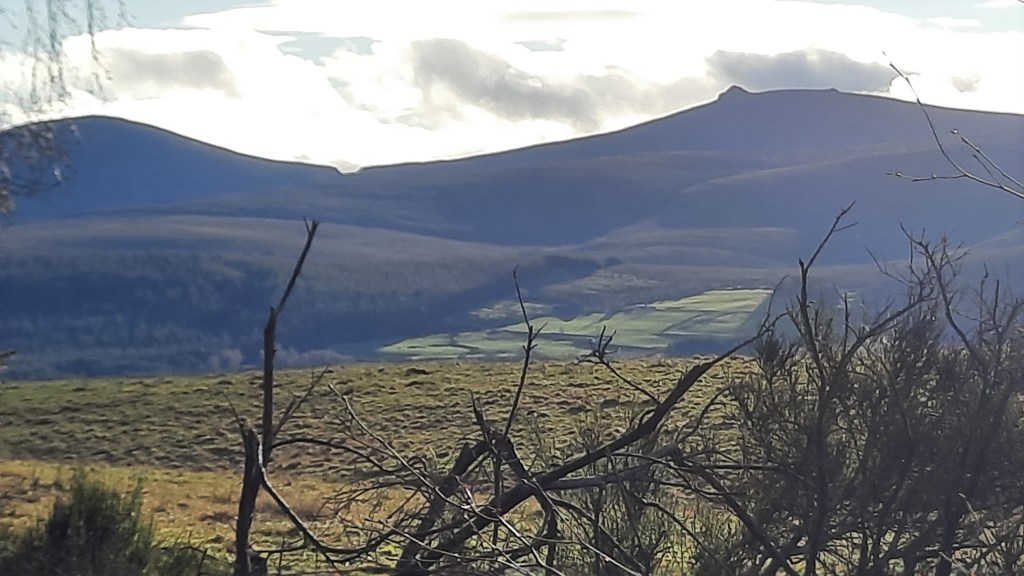
View from Tom’s Cairn

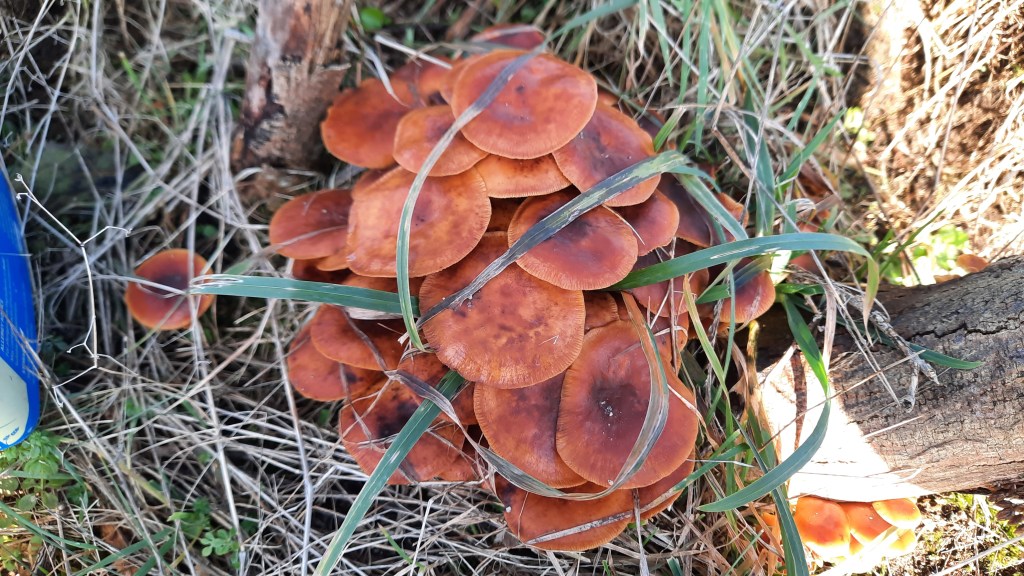
Of course I was on the hunt for mushrooms – I always cycle with one eye on the hedgerows! As I was quietly peddling along, I spotted Velvet Shanks in a very inaccessible place. Not wanting to be defeated, yours truly clambered over a fence, waded through a swamp, tore their (expensive 😭) waterproof trousers on barbed wire, and nearly tippled over into a burn. Back on the bike with my hard-earned treasure, after literally 20 metres I spotted a bouquet of Velvet Shanks (pictured below) sticking out and I nearly rode into it. Didn’t even have to get off in order to pick them.

Today I went out again and while I feared having to sport ductape-embellished waterproofish trousers 😆, John managed to glue the hole over. It didn’t rain, but a very strong wind made for slow progress. More barbed wire clambering was involved to get tonight’s meal: Velvet shanks within John’s signature fluffy omelette. Just listen to these beauties sizzling:

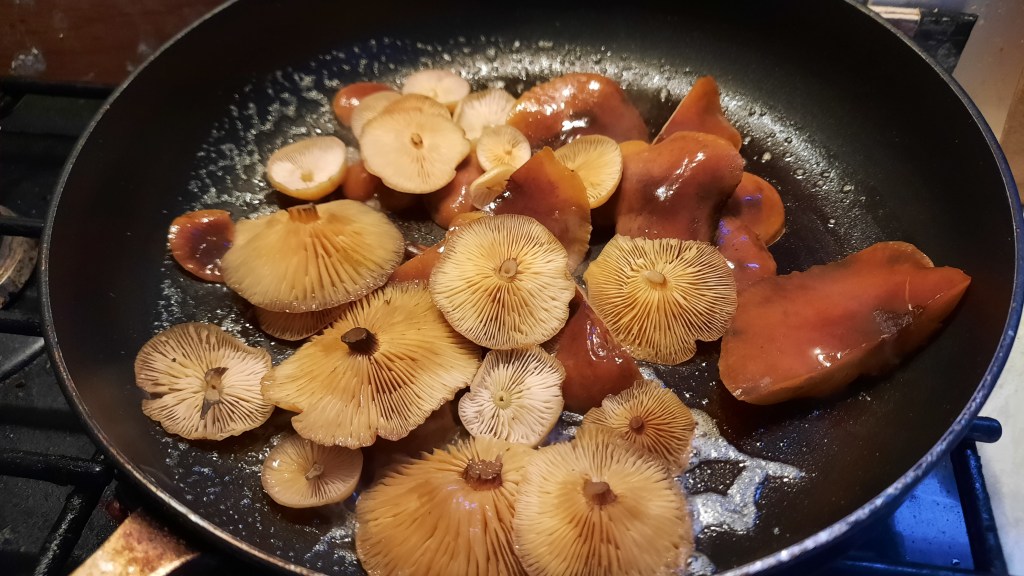
Velvet shanks in the pan

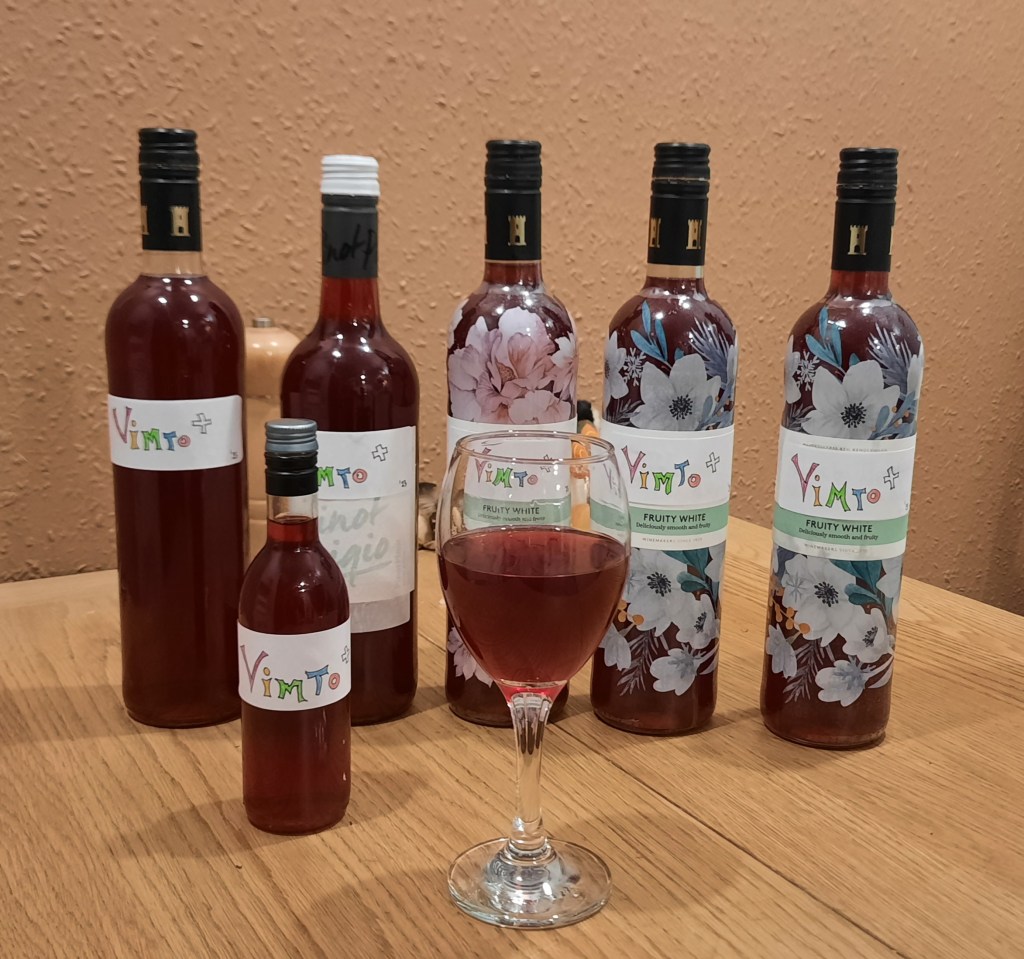
We’ve also cracked open a bottle of our latest wine, which we called Vimto+ in acknowledgement of the 6 different fruits that have gone into it.

Wine collection

It’s an extremely drinkable wine, and has an alcoholic effect that’s not immediately noticeable. But oh boy after a few glugs it is!

We’re currently sitting by the woodstove (converted to burn smokeless coal) and I feel pleasantly ‘wind burnt’ from today’s adventure. Have a great week folks!

Happy New Year!

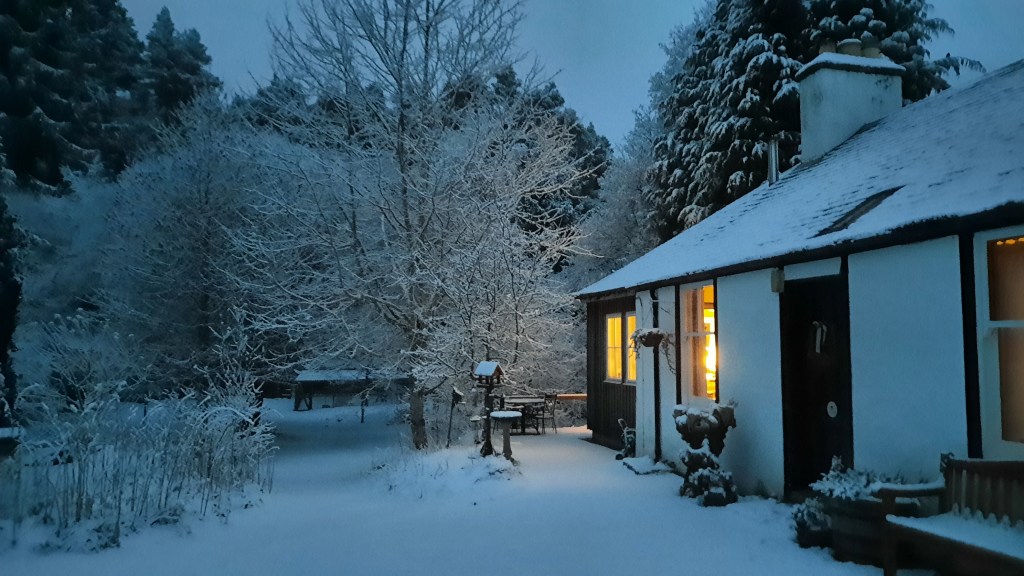
John and I spent the last days of 2022 and the first days of 2023 in Speybridge. A delightful old cottage was our temporary home:

Early morning in the snow

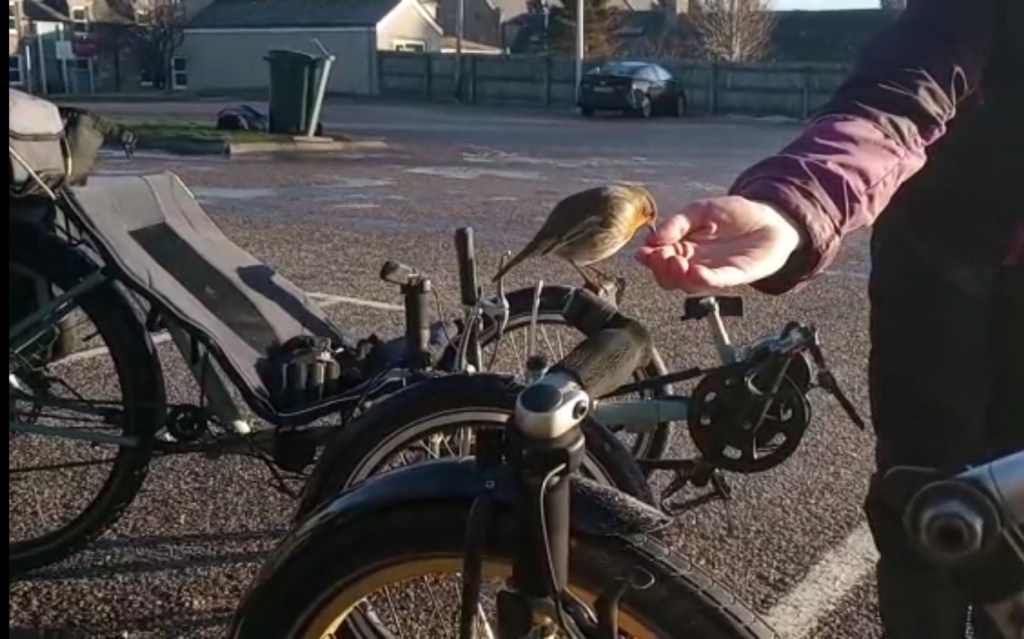
We triked to Tomintoul, where we found all eateries closed. Armed with pies from the village shop, we had a stand-up lunch by our trikes in the low midday sun. Very soon we had an audience! One inquisitive little robin came to see what we were munching on. I dropped some crumbs on the ground, which it eagerly consumed. Then it hopped on the trike frame (and pooped). It sat so still and seemingly at ease, that John got his camera out while I tried handfeeding our little friend. I can still feel its beak gently picking off the butter and seeds from my fingers:

Tommy the robin

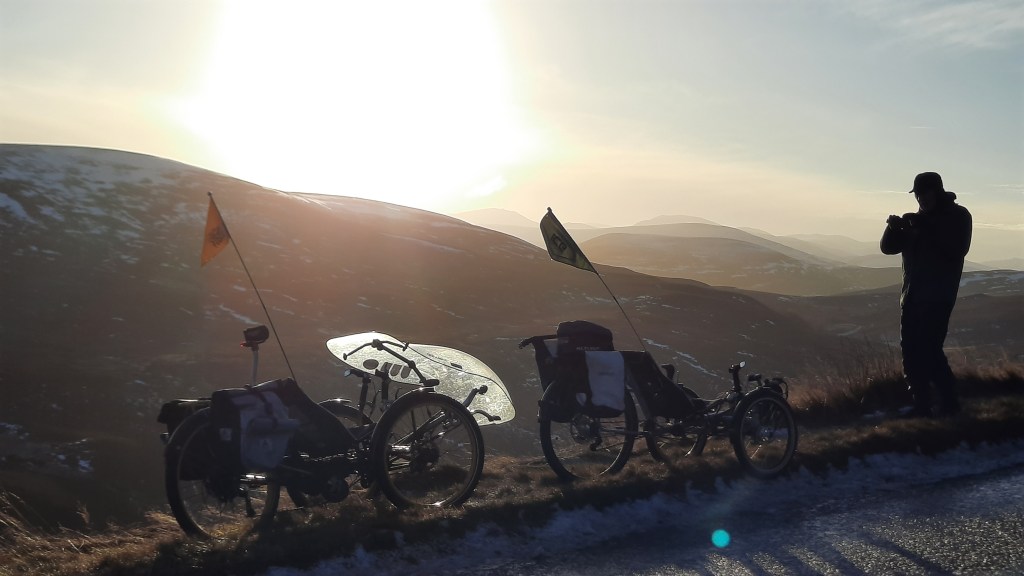
The ride back to Speybridge was amazing, with a winter sun colouring the hills and the sky. I wished the journey was twice as long!

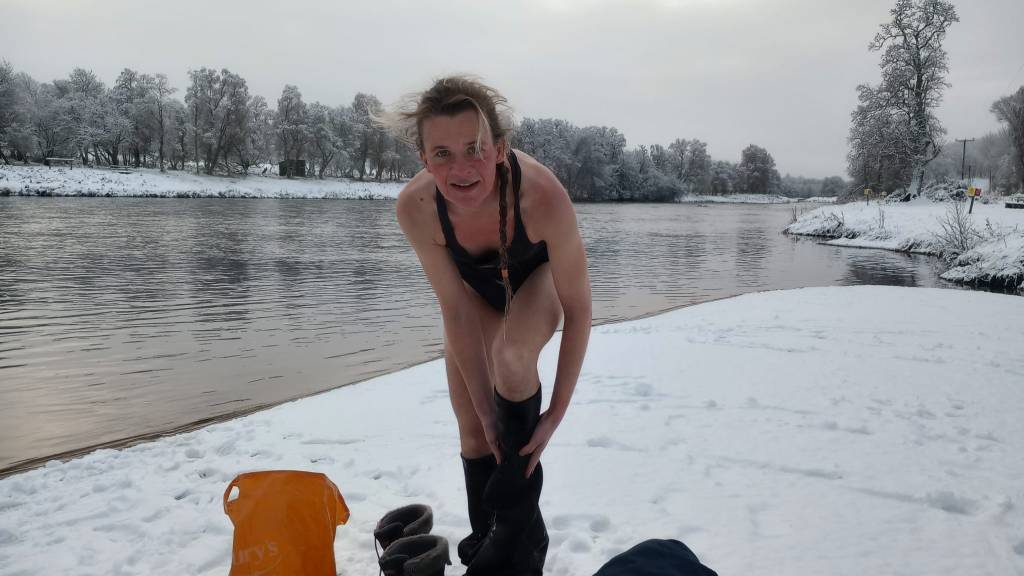
On New Year’s morning I went for a swim in the Spey, to make sure I would start the year well and truly awake. It was awesome and the feeling lasted all day:

Fresh out of the river

And so begins a new year. Yesterday I sowed my onions and leeks, while the summer still feels far away. In the woods, under the snow lies all the mushroom mycelium, dormant and waiting for its moment in the sun. I’m hoping to discover new species (well, new to me that is) this year, and perhaps 2023 is the year where John and I will reach the top of the allotment waiting list!

Have a fantastic year folks, full of love and honest wholesomeness. ❤️

Our traditionally non-traditional Christmas

Yesterday morning, while roast turkey aromas whafted down the neighbourhood, John and I triked to Banchory on almost deserted roads. Our target: Scolty Hill! We choose a different hill every year and always take plenty of Christmas cake with us. It was awesome at the top and our eyes got drunk on the vistas that stretched out below us:

Scolty Hill, looking west towards the Cairngorms
Looking south towards Kerloch (where we walked last Christmas)
Looking west again

Even in the depth of winter, there is food around for us. Apart from emergency tummy fillers like lichen (some sources say you could survive on them if there’s really nothing else), the Velvet Shanks are now in full swing! I picked some on Christmas Eve and again today:

Velvet Shanks

They tend to grow on (dead or dying) gorse, which lines our Aberdeenshire lanes prolifically. Nobody else seems to pick them, as you need to be both a forager (to know where they are) and a cyclist (to be able to spot them and stop), and the chance of belonging to both these categories is small. That said, I will knock on wood in the hope that “my” spots will be preserved for another lunch on Wednesday!

I hope you had a wonderful Christmas, whichever way you chose to spend it. We’re now preparing for a long weekend away in the Cairngorms to see in the new year – watch this space for photos and stories 😁

Our fellow foragers

In addition to a small percentage of humans, all other animals forage. In the winter, when fewer mushrooms and edible plants are present, and my fruit stores are gradually dwindling, I’m more acutely aware of the plight of my fellow Earth inhabitants. Watching horses scrape off snow and ice with their hooves to get to (some pretty limp) grass, witnessing proper battles between pigeons, blackbirds, redwings and robins in our garden (over a fat ball full of seeds), I realise that this truly is life or death for them. Maybe not the horses, but they surely have the inborn skills to survive.

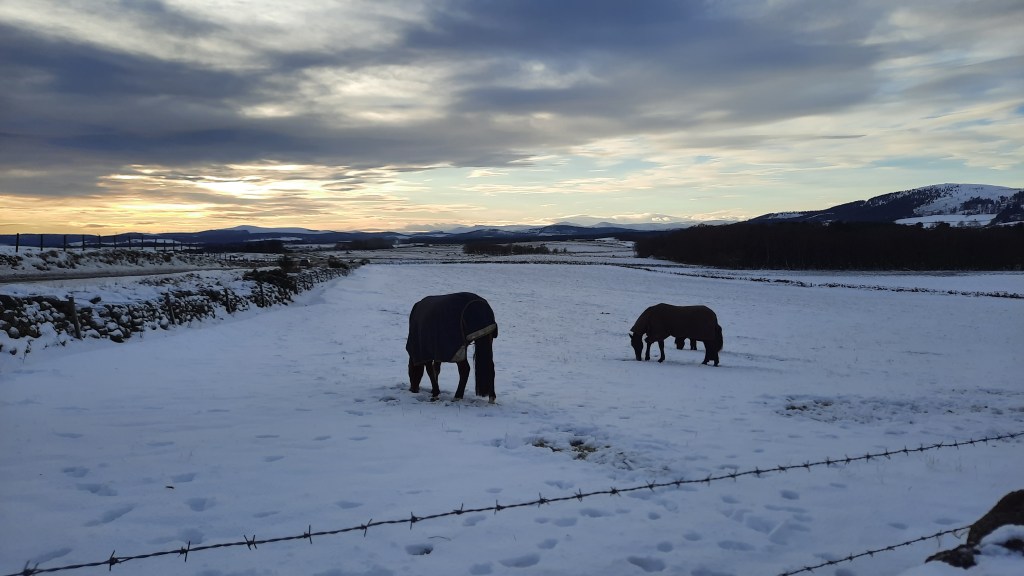
Scraping for grass

As some of you know, I have built up a very special relationship with the crows in our neighbourhood. Over the past few years I’ve come to know many as individuals, recognizing them by appearance, behaviour and sound. These all have names, of course.

When the snow came down, a couple of weeks ago, I went to them every day with pocketfuls of redskin peanuts. Within a day or so we had established a firm routine where they would fly to me from all wind directions as soon as they saw me appear on the field! Even within this large group I can make out the individual birds. There’s Halfbeak who is missing the top half of their beak (and I always make sure he/she gets lots), a very noisy Milky (who has a white patch under his left wing), Pinewood (who hatched in our garden and who is extremely territorial), Whistle (Pinewood’s chick), and my favourite, Archie (who has a speckled breast and is very tame – he usually hops behind me at no further than a foot’s distance). Here they are:

Feeding my crows

Some people might say that it’s wrong to feed the birds, and that I need to “let nature run its course”. Well, my response is that I would be happy to let nature run its course, if the rest of humanity would do the same. But these crows lost a huge part of their habitat when Dandara built their 350 luxury homes on a field that once was wild. As long as humans keep taking land that is not theirs, I will continue to feed the crows.